
Blog · September 24, 2026
Florida Sun vs. Your RV Roof: Why UV Is the Biggest Threat in Tampa Bay
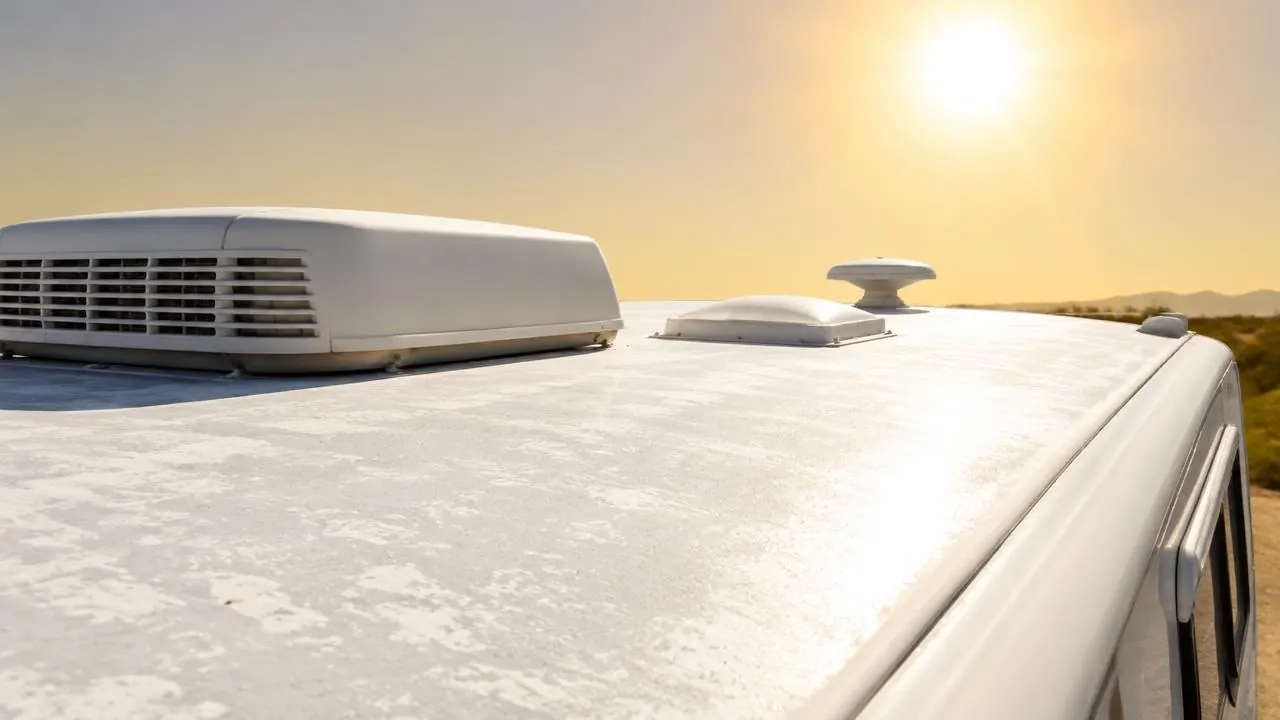
When people think about RV roof trouble in Florida, they picture hurricanes and summer storms. Those matter. But the thing working on your roof every single day is the sun. In Tampa Bay it is strong most of the year, and an RV parked in a driveway, a storage lot, or a campsite takes that sun on the roof from morning to evening.
Understanding what UV actually does helps you slow it down, and it helps you spot the point where the roof needs more than a cleaning.
What UV does to roof material
Ultraviolet light breaks down the chemical bonds in many roofing materials and sealants over time. You cannot see it happen day to day, but you can see the results. The surface loses its oils and flexibility. Material that was soft and stretchy becomes stiff. Once it is stiff, the normal movement of an RV, from heating up in the day and cooling at night to the flexing on the road, starts to cause small cracks.
Heat makes it worse. A roof in the Florida sun can get far hotter than the air temperature. That daily cycle of heating and cooling makes materials expand and shrink, which pulls on every seam and every bead of sealant.
Chalking: the first warning
Run your hand across a sun-worn roof and it may come away with a white, powdery residue. That is chalking. It is the top layer of the material breaking down and wearing off. A little chalking is normal on some roof types as they age. Heavy chalking, where your hand comes away white every time and the residue runs down the sides of the RV after rain, tells you the protective surface is wearing thin.
Those white streaks on the sidewalls are not just a cleaning problem. They are part of your roof washing away.
Cracking: the next stage
After the surface wears, cracks show up. They usually appear first in the sealant, because sealant is softer and takes the most movement. Look for fine lines that look like dried mud, sealant pulling away from the edge of a vent, or small gaps opening in the corners. These are tiny at first. They do not stay tiny.
Why RVs parked outside all year age faster
An RV that travels spends part of its life moving, parked in shade, or stored somewhere cooler. An RV that sits in Florida year round, especially one that never moves from the same sunny spot, gets the full dose every day. The south and west facing parts of the roof, and anything that sits in direct afternoon sun, usually show wear first.
Simple habits that help
You cannot stop the sun, but you can cut down how much of it the roof takes.
- Park in shade when you can, but not under trees that drop sap, limbs, or a steady load of leaves.
- If you use a cover, use one made for RVs that breathes. A plastic tarp holds moisture against the roof and can rub the surface raw in the wind.
- Keep the roof clean. Dirt and leaves hold heat and moisture and hide damage.
- Look at the roof every few months, not just after storms. Wear from the sun is gradual, so regular checks catch it early.
Cleaning the roof the right way
Cleaning is good for the roof, but the wrong cleaner can do more harm than the dirt.
- Find out what kind of roof you have before buying any cleaner. Products made for one roof type can damage another.
- Avoid harsh household cleaners, solvents, and anything with petroleum distillates unless the product is made for your roof.
- Use a soft brush and plenty of water. Scrubbing hard with a stiff brush can wear the surface faster than the sun.
- Rinse well so cleaner does not dry on the roof or streak down the sides.
- Clean early in the morning or late in the day so the roof is not baking hot.
When it is time to reseal
Cleaning and shade slow the sun down. They do not reverse it. It is time to have the roof resealed when you see:
- Sealant that has turned hard, cracked, or pulled away anywhere on the roof.
- Chalking that is heavy and keeps coming back right after cleaning.
- Gaps you can see daylight or a fingernail into around vents, skylights, or the edges.
The best time to reseal is before you have a leak. Once water gets in, you are no longer just protecting the roof. You are also fixing what is under it.
If your roof is starting to look tired from the sun, we can come out anywhere in Tampa Bay and take a look. Call or text and tell us how long it has been since the roof was last sealed.
Need a hand with this? Call or text (813) 455-5206.
See our RV Roof Resealing and Coating service