
Blog · September 10, 2026
Humidity and Your RV: How to Prevent Mold and Wood Rot in Florida
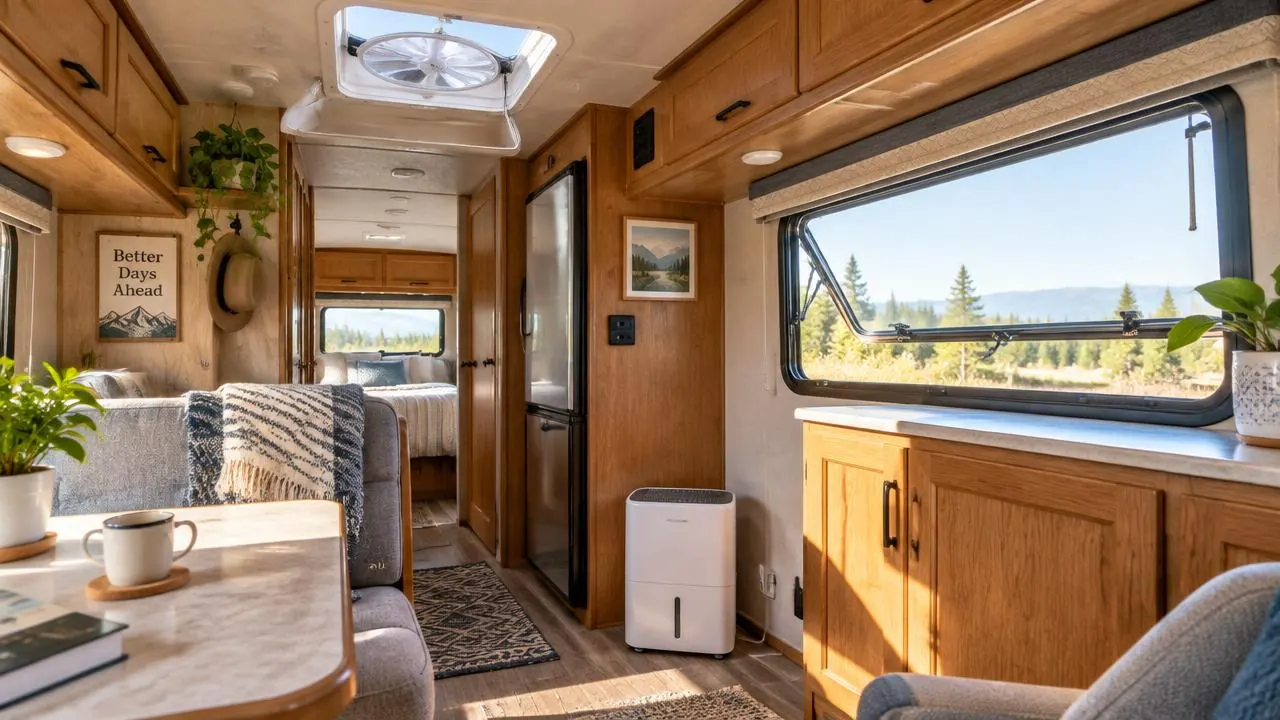
Not every water problem in an RV comes from a leak. In Florida, a lot of it comes straight out of the air. Our humidity stays high for much of the year, and an RV is a small, closed space with thin walls, lots of wood, and big temperature swings between day and night. Put those together and moisture builds up inside, even when the roof is perfectly sealed.
The good news is that this kind of moisture is mostly about habits. A few simple routines go a long way.
Why humidity gets trapped in an RV
Warm air holds more moisture than cool air. When warm, damp air inside an RV touches a cooler surface, like a window, an outside wall, or the underside of the roof at night, the moisture turns back into water. That is condensation. You see it on windows in the morning. You do not see it inside walls, behind cabinets, or under mattresses, but it happens there too.
Everyday living adds more. Cooking, showers, washing dishes, and even breathing put water into the air. In a house, that moisture spreads out. In an RV, it has nowhere to go unless you give it a way out.
Ventilation habits that work
- Run the roof vent fan when you cook and shower, and leave it running a while after.
- Crack a window on the opposite side from the fan so air moves across the RV instead of just out the top.
- Use a vent cover so you can leave roof vents open in light rain.
- Leave interior doors and cabinet doors open now and then so closed spaces get fresh air.
- Do not dry wet towels and clothes inside if you can help it.
Dehumidifying
When the RV is closed up, ventilation alone may not keep up. A dehumidifier pulls water out of the air directly.
- For an RV you live in or use often, a small electric dehumidifier works well. Empty it regularly.
- For an RV in storage without power, moisture absorber tubs placed in closets and cabinets help in small spaces.
- Running the A/C also removes moisture, which is one reason RVs kept cool tend to stay drier.
- A simple humidity gauge costs little and tells you whether your habits are working.
Where moisture hides
Condensation and dampness collect where air does not move and surfaces stay cool.
- Under sinks, where small plumbing drips can go unnoticed for months.
- Around windows, especially at the bottom corners where water runs down and collects.
- Inside closets and wardrobes on outside walls, where clothes block airflow.
- Under the mattress, where body heat meets a cool platform. Lift it now and then to check.
- Behind cushions and inside dinette storage on outside walls.
- In overhead cabinets in the corners against the outside wall.
Early signs of rot
Rot does not happen overnight. It starts quietly. Catching it early keeps a small repair small.
- Dark spots or a gray, fuzzy film on wood or fabric.
- Wood that looks darker than the wood around it.
- A screw or staple surrounded by a dark ring.
- Trim that has started to swell or lift.
- A spot that feels slightly soft when you press with your thumb.
If you smell mildew
That musty smell is a signal to go looking, not something to cover with air freshener. Open the RV up and air it out, then work through the places above with a flashlight. Clean visible mildew on hard surfaces with a mild cleaner and dry the area completely. Find out why that spot was damp. If it was condensation, change your ventilation habits. If the smell keeps coming back from the same wall or corner, or the wood there is soft, water may be getting in from outside, and the damage behind the panel may be bigger than what you can see.
When to call a pro
Surface mildew that cleans up and stays gone is something you can handle. Call for help when:
- Wood feels soft or crumbles.
- The smell comes back in the same place.
- Panels bulge, ripple, or come loose.
- You find damp spots with no obvious source.
We work all over Tampa Bay and come to wherever your RV is parked. Call or text and tell us what you are seeing or smelling.
Need a hand with this? Call or text (813) 455-5206.
See our RV Water Damage and Rot Repair service